Jeroen Goossens
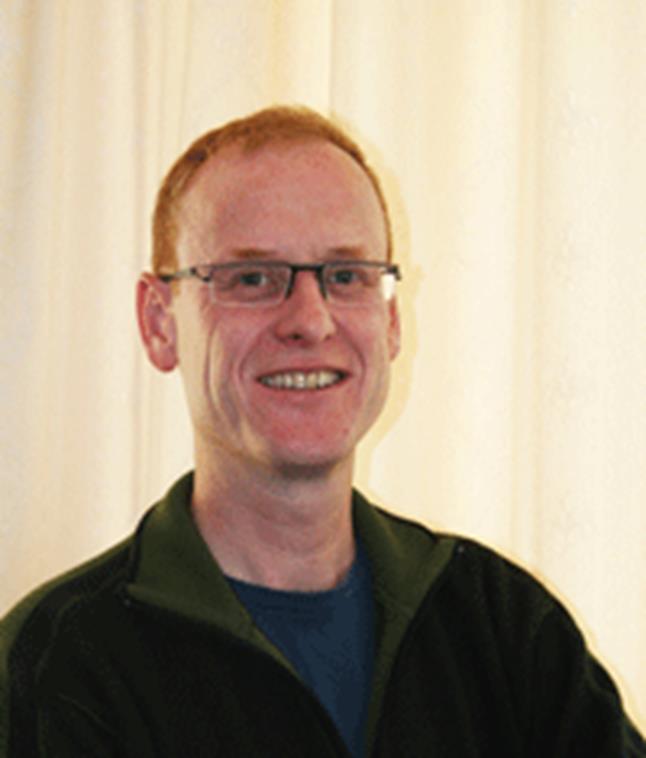 Name
Name
H.H.L.M. Goossens, PhD
Address
Donders
Institute for Brain, Cognition and Behaviour
Department
of Cognitive Neuroscience, Section
Biophysics
Radboud University Nijmegen Medical Centre
Kapittelweg 29
Office 02.280 - Trigon building
NL 6525 EN Nijmegen
Phone
+31 24 36 10906

Go to:


What we study
In
our Visuomotor Lab we investigate how the primate
brain transforms sensory information into conscious percepts and voluntary
motor acts. Our studies involve experiments with human subjects and with
macaque monkeys that are trained to perform visuomotor
tasks against positive rewards. Human participants are tested with the use of
psychophysical and neuroimaging techniques. In macaques we also use
neurophysiological techniques such as single-unit recordings, electrical microstimulation and local inactivation, that cannot be
applied in human. Our goal is to understand exactly how the brain works. We are
firmly convinced that only with this knowledge we can truly help patients
suffering from the many disorders of perception, awareness and movement caused
by debilitating brain diseases. Current projects focus on executive control
mechanisms for action and perception in the frontoparietal
cortex, optic-flow processing in extra-striate visual cortex, and on the neural
underpinnings of saccadic search behaviour in
exploring visual scenes.
Responsible animal research improves
the lives of humans
Basic research advances scientific knowledge and
medical innovation by expanding understanding of the structure and function of
molecules, genes, cells, systems, and complex behaviors. Clinical researchers
exploit these findings and identify new applications that lead to medical
treatments. Continued investment in basic research is essential to ensuring
discoveries that will inspire scientific pursuit and medical progress for
future generations.
·
Read
the Basel Declaration of
Nov. 2010, signed by European scientists on how to conduct and communicate responsible
animal research.
·
Read
about Brain
Research Success Stories. They are designed to inform the public and
elected officials about the recent successes and future potential of
neuroscience.
·
The
need for non-human primates in neuroscience research. A short overview can be
found in the brochure Primates
in Medical Research. For more details, read the Weatherall report
(UK) and the SCHER
report (EU).
·
Are you also tired of the false and misleading
information spread by animal activists? This site shows
how experiments with non-human primates are really carried out in Neuroscience
labs around the world (from
the Tübingen Max Plank Institute for Brain Research,
Germany).
·
An example of monkey neuroscience research: Neuro-prosthetics
in the Pittsburgh Motor Lab (on Multimedia, click on their videos!)
·
Standing
up for science. See why Pro-Test, Americans for Medical Progress
(AMP) and Speaking of Research think
animal experiments are necessary in biomedical research. These public
organizations aim to dispel the irrational myths promoted by
anti-vivisectionists and to encourage people to stand up for science and human
progress.
·
Animal
Research.Info
provides reliable information from scientists worldwide about the contribution
of animal research to medical advances. Look at this article to see why there is a need for non-human primates in cognitive
neuroscience.
·
How
do researchers work with primates? Which species do they use? What has research
with primates revealed? How are the primates looked after? These are the
questions answered in the new iBook, Primates in Medical Research. A PDF version can be downloaded here.
In Nederland worden per jaar ca 600 duizend proefdieren gebruikt. Met andere woorden, er wordt per jaar één proefdier (typisch een muis of rat) gebruikt om ruim 25 Nederlanders uiteindelijk betere medische zorg te bieden. Het belang van fundamenteel onderzoek kan daarbij eigenlijk niet worden overschat. Wil je meer feitelijke achtergrondinformatie over dierproeven? Kijk dan op de website van de Stichting Informatie Dierproeven.
Hersenscans een alternatief voor proeven op apen? Helaas is dat een fabeltje. Lees bijvoorbeeld hier waarom.
Curriculum Vitae
·
1987- 1993:
Student at the University of Utrecht, NL. Degrees in Medical Biology and Biophysics.
Research projects on human arm-muscle coordination and electrophysiology of
sound localization in fish. Graduated with honor.
·
1993-1997:
Ph.D. student at the Department of
Medical Physics and Biophysics, University of Nijmegen, NL. Research
involved a series of electrophysiological (monkey Superior Colliculus) and
behavioral (monkey and human) studies on saccade generation, eye-head movements
and sound localization. Ph.D. thesis: 'Sensorimotor transformations and
feedback signals involved in gaze control'. Cum laude promotion.
·
1998-2000:
Postdoctoral student at the Department
of Physiology, University of Rotterdam, NL. Research on the role of
cerebellar Long-Term Depression (LTD) in visual and vestibular stabilization
reflexes involving eye movement and Purkinje cell recordings from alert
transgenic mice.
·
2000-Present:
Assistant professor at the Department of
Cognitive Neuroscience, Donders
Institute for Brain, Cognition and Behaviour. NL.
Neurophysiology and neuroimaging in primates. Long-term research aims are to
explore how the brain transforms sensory information into perceptual
representations and motor acts, and how different perceptual representations
interact with different motor pathways.